
Dental Implants in Pathirippala
Dental implants offer a durable, secure solution for replacing missing teeth. By anchoring directly into the jawbone, an implant restores structural stability, chewing comfort, and natural oral aesthetics. Complete Dental Clinic in Pathirippala provides personalized implant evaluations and treatment planning tailored to your oral health and long-term restorative needs.
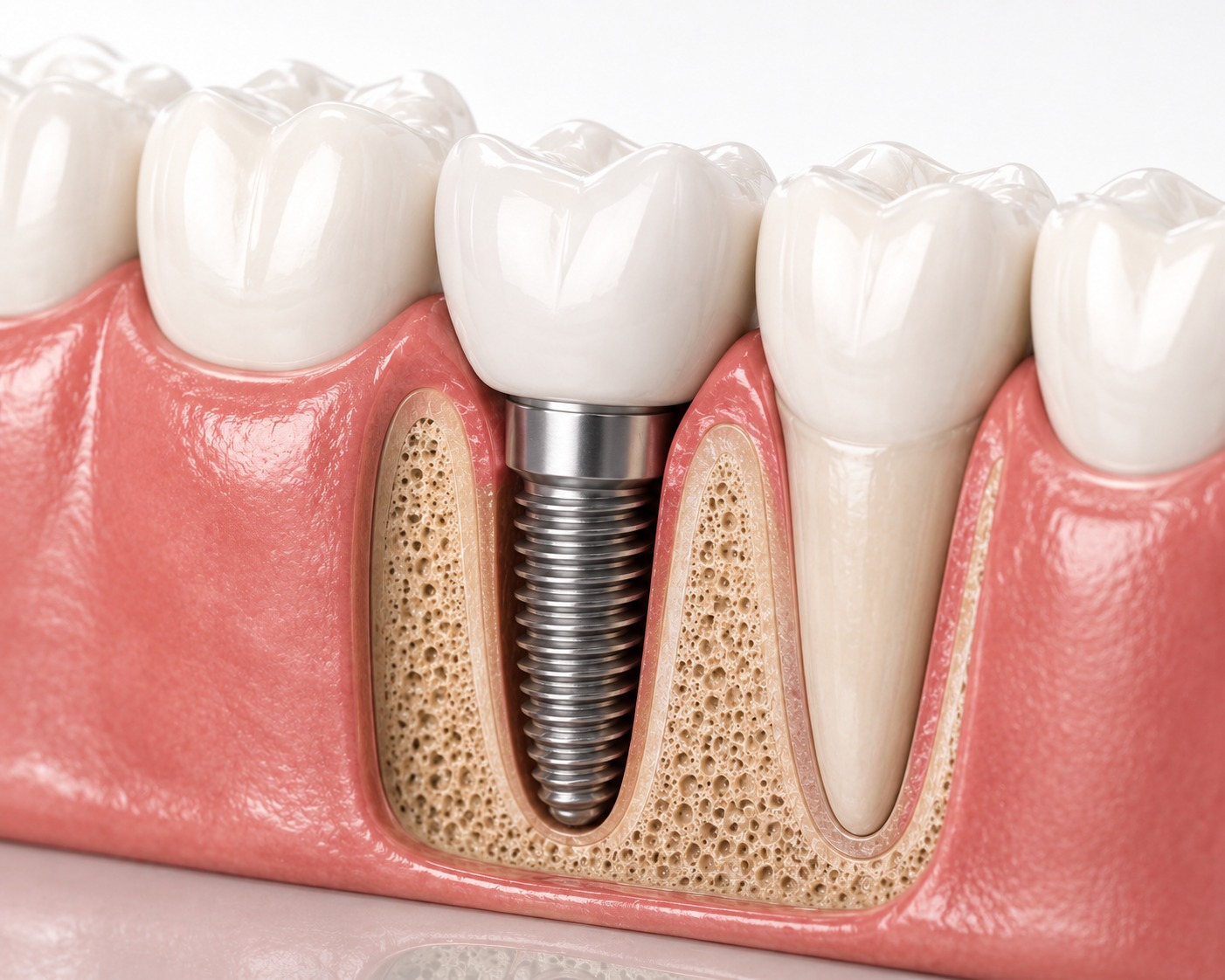
What Are Dental Implants?
A dental implant is an artificial tooth root placed into the jawbone to support a replacement tooth or bridge. Unlike traditional restorations that rest solely on the gum surface or attach to adjacent teeth, an implant integrates with your natural bone tissue to establish a solid, self-supporting foundation.
It is important to understand how dental implants differ from other treatments across clinical dentistry:
Saving Natural Teeth vs. Replacement
When a natural tooth has deep infection or damage, a root canal treatment aims to preserve the natural tooth structure. Implants are considered only when a tooth is already missing or cannot be saved through restorative care.
Structural Replacement vs. Cosmetic Design
While aesthetic procedures like a Hollywood smile or cosmetic dentistry focus on enhancing smile contours and surface enamel, dental implants serve a fundamental structural and functional role in restoring missing tooth roots.
The Three Main Implant Components
A complete dental implant restoration functions as a unified system composed of three core parts:
1. Implant Fixture
A small, biocompatible post carefully placed into the jawbone. It acts as an artificial tooth root, providing the structural base for the replacement tooth.
2. Abutment
A precision connector placed on top of the implant fixture. It extends slightly above the gum line to securely support and hold the visible crown in place.
3. Prosthetic Crown
The custom-crafted artificial tooth that attaches to the abutment. It is tailored to match the natural shade, size, and contours of your neighbouring teeth.
How Implant Healing Works
The cornerstone of dental implant stability is a natural biological process called osseointegration. After the implant fixture is placed into the jawbone, living bone cells gradually integrate with the microscopic surface of the biocompatible post.
Over time, this biological bond secures the implant firmly in place, enabling it to withstand everyday biting and chewing forces similar to a natural tooth root.
Individual Healing Timelines
Because bone density, general health, and surgical sites differ from person to person, healing and integration rates vary significantly. Some patients require a brief integration period, while others need extended healing time before the final crown can be attached. Your dentist will monitor tissue maturation through follow-up reviews to ensure solid stability before placing the permanent crown.
Who May Be Suitable for Dental Implants?
Suitability for dental implants is determined through a comprehensive clinical examination. Key factors evaluated during consultation include:
Sufficient Jawbone Volume
Adequate bone height and density in the jaw are needed to support and anchor the implant fixture securely.
Healthy Gum Tissues
Gums must be free of active periodontal disease to ensure proper healing and long-term protection of the implant site.
General Health & Medical History
Overall health, healing capacity, and well-managed medical conditions are reviewed. Chronic health conditions do not automatically rule out implants, but require careful evaluation.
Commitment to Oral Hygiene
Diligent daily brushing, flossing, and attending regular checkups are essential to prevent inflammation and ensure lasting success.
A thorough clinical examination remains the only accurate way to confirm whether dental implants are appropriate for your specific oral condition.
The Dental Implant Treatment Process
Implant treatment is carried out in structured phases to prioritize safety, precision, and lasting stability:
Consultation and Assessment
A detailed clinical exam evaluates your oral health, gum condition, bite dynamics, and personal smile goals.
Diagnostic Evaluation and Planning
Precise anatomical evaluation using diagnostic imaging, including digital dental X-rays, to assess bone structure, nerve pathways, and fixture positioning. Learn more about our digital dental X-ray evaluation.
Implant Placement
If clinically suitable, the implant fixture is positioned into the jawbone during a minor procedure performed under local anaesthesia for patient comfort.
Healing and Review
A crucial healing period during which osseointegration occurs. Follow-up appointments allow your dentist to monitor tissue response.
Placement of Final Restoration
Once secure integration is verified, the abutment and custom-fabricated prosthetic crown are attached, restoring function and appearance.
Ongoing Maintenance
Routine preventive care, professional cleanings, and periodic examinations help maintain the health of surrounding bone and gum tissues over time.
Important Clinical Considerations
Every patient presents a unique oral anatomy. Achieving a healthy, long-lasting restoration requires careful attention to pre-existing dental conditions and appropriate timing:
Managing Existing Dental Conditions
Active gum inflammation, tartar buildup, or untreated cavities in neighbouring teeth must be treated prior to implant placement to minimize bacteria and create a healthy environment for healing.
Prior Tooth Extraction and Site Recovery
If an unrestorable tooth is still present, a planned tooth extraction is performed first. Depending on the clinical case, the implant may be placed after the extraction socket has healed sufficiently to support a fixture.
Supplementary Procedures if Required
When bone volume is limited due to long-standing tooth loss or natural resorption, preparatory procedures to enhance bone support may be discussed during consultation to determine if implant placement is feasible.
Dental Implants vs. Bridges vs. Dentures
There are several ways to replace missing teeth, each with its own clinical indications, advantages, and considerations:
Dental Implants
Fixed & Bone-Anchored- Supported directly by the jawbone
- Does not require altering adjacent healthy teeth
- Provides secure, natural biting stability
- •Requires adequate bone volume and healing time
Conventional Bridges
Fixed & Tooth-Supported- Fixed in place without surgical placement
- Shorter overall treatment timeline
- •Requires reshaping neighbouring healthy teeth
- •Does not stimulate bone under the missing tooth
Removable Dentures
Removable & Tissue-Supported- Non-invasive option for multiple teeth
- Can be removed daily for easy cleaning
- •May shift during chewing or speaking
- •Requires periodic adjustments over time
The most appropriate option depends on your oral health, bone support, personal preferences, and clinical assessment.
Why Choose Complete Dental Clinic?
Restoring missing teeth is an important health decision. Here is what you can expect from our team:
Individualized Clinical Evaluation
Every implant plan is tailored to your specific bone anatomy, gum health, and bite function rather than using a one-size-fits-all approach.
Focus on Patient Comfort
Procedures are conducted with modern local anaesthesia and a gentle clinical touch to ensure your visits remain calm and comfortable throughout.
Integrated Oral Healthcare
From preliminary diagnostic imaging and gum care to routine general dentistry maintenance, your dental care is managed seamlessly under one roof.
Accessible Pathirippala Location
Conveniently located at Maimoon Square with parking and easy access for patients visiting from Pathirippala and surrounding Palakkad areas.
Dental Implant Consultation in Pathirippala, Palakkad
Complete Dental Clinic provides dental implant consultations and restorative treatment planning for patients residing in Pathirippala, Palakkad, and nearby localities including Ottapalam, Mankara, and Parali. If you are dealing with one or more missing teeth, an initial consultation helps identify whether dental implants or alternative restorations are best suited for your mouth.
Our clinic is located at 1st Floor, Maimoon Square, opposite South Indian Bank, Pathirippala, Kerala 678642. We welcome you to contact our team to schedule an appointment and discuss your missing-tooth replacement options.
Frequently Asked Questions About Dental Implants
Common questions regarding dental implant treatment, healing, and suitability:
What is a dental implant and how does it work?
A dental implant is a biocompatible titanium fixture placed into the jawbone that serves as an artificial root for a missing tooth. Once integrated with the surrounding bone, an abutment and custom prosthetic crown are attached, creating a stable, natural-looking replacement tooth.
Is dental implant placement painful?
The placement procedure is carried out under local anaesthesia to numb the area, ensuring comfort during treatment. Most patients report only mild soreness or tenderness for a few days afterward, which is typically managed with routine over-the-counter pain relievers.
How long does dental implant treatment take?
Treatment duration varies based on individual clinical conditions. It involves an assessment phase, implant fixture placement, a healing period for osseointegration, and final crown placement. The exact timeline depends on individual bone quality, healing response, and whether preparatory procedures are needed.
Who may be suitable for dental implants?
Adults with one or more missing teeth, healthy gums, adequate jawbone density, and good general health are typically good candidates. A comprehensive clinical examination and diagnostic imaging are necessary to confirm suitability for each patient.
What happens if there is insufficient jawbone?
If the jawbone has resorbed or lacks sufficient volume to support an implant, preparatory treatments to rebuild bone support may be discussed during consultation. Alternatively, alternative restorative solutions like conventional bridges may be evaluated.
How do implants compare with bridges and dentures?
Dental implants are anchored directly in the jawbone and do not require altering adjacent healthy teeth. Conventional bridges rely on neighbouring teeth for support, while dentures are removable appliances. Suitability depends on bone structure, oral health, and personal goals.
How can dental implants be maintained?
Dental implants are maintained similarly to natural teeth with twice-daily brushing, daily flossing around the restoration, and attending regular dental checkups and professional cleanings. Consistent hygiene protects the supporting gums and bone from inflammation.
What factors affect dental implant treatment cost?
The cost of dental implant treatment depends on several clinical variables, including the number of implants required, the type of prosthetic restoration, diagnostic imaging needs, and whether any preparatory gum or bone procedures are recommended.
Considering Dental Implants?
Schedule a consultation at Complete Dental Clinic in Pathirippala to discuss your tooth replacement options and receive an individualized assessment.